Moving to Russia with One Suitcase: What I Actually Used in the First 30 Days
Let me tell you about the 14 items I packed and never touched.
A tie. A second tie, in case the first tie had a bad day. A hardcover grammar reference the size of a paving slab. Three “professional” shirts that needed ironing, and an iron I had also packed, which tells you everything about the quality of my planning.
Meanwhile, here is what nobody told me: a single 23-kilo suitcase is enough to start a whole new
life in Russia. Not because Russia is hard to live in, but because it is far easier than the internet’s
collective imagination suggests, and far more surprising in ways that will make you grin at
strangers on the metro.
This is my honest, slightly embarrassing, entirely true list of what I actually used in my first 30
days. If you are an English teacher weighing up the move, read on. By the end, you may have a
very strong urge to check flight prices.

The Suitcase Itself: Less Is More (and Also Less Is Required)
Here is the first plot twist: you do not need to bring everything, because Russia has everything.
I arrived expecting a scene from a black-and-white film: grey queues, one type of cheese, a single
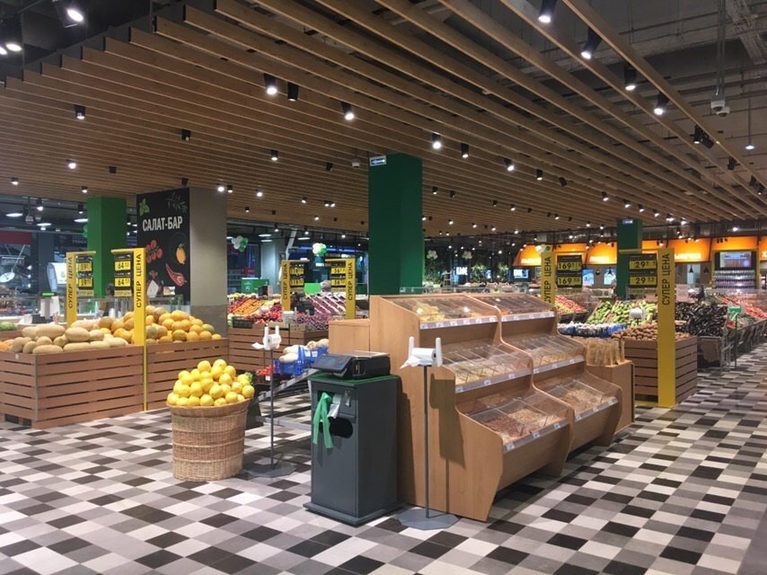
shop selling a single thing. Instead I found supermarkets stocked almost as well as back home,
delivery apps that bring groceries to your door in fifteen minutes, and a bakery on my street that opens before me eyes do.
So what did I actually need? Let me break it down by what earned its place in my suitcase.
The Warm Layers (Yes, Really, and No, Not for the Reasons You Think)
Yes, Russian winters are real. But here is what surprised me: the cold is not the enemy.
Unprepared is the enemy. Inside, everything is heated to roughly the temperature of a friendly sauna. Central heating in Russia is not a suggestion; it is a lifestyle. I spent my first November evening standing in my apartment in a T-shirt, with snow falling outside, wondering how can I turn the heat down.
So what did I use? One good coat, one pair of proper boots, a hat, and gloves. That was it.
Locals will look at your outfit with a quiet, gentle judgment, and then, if you are lucky, a babushka will tell you to button up. This is not an insult. This is love. Accept it.
Used daily: 100%. Regret about not packing more: 0%. You can buy excellent winter gear in
Russia for a fraction of what you would pay back home. Many teachers I know bought their coats
after arrival and were glad they did.

A Phone That Works (and a Little Humility)
The one thing that genuinely changed my first week was my phone, and the apps on it.
Here is the deal: a Russian SIM card and data plan is cheap, absurdly cheap, and gives you more data than you will ever need. I bought mine in about ten minutes, in a shop where the assistant patiently typed things into my phone while I nodded like I understood. Mobile internet in Russian cities is fast almost everywhere. The one exception is the metro: the cell signal drops underground, but the trains have Wi-Fi, so you stay online anyway.
What I used constantly:
- A translation app. Not for lessons, for life. Menus, pharmacy labels, and street signs.
- A taxi app. Much cheaper than back home. Yandex Go
- A maps app – Yandex maps
A Smile (This One Is Surprising)
Okay, I know. You were expecting a packing list with items. But hear me out, because this is the
piece of cultural wisdom that saved me.
There is a famous stereotype that Russians never smile at strangers. Here is the more accurate
version: Russians don’t smile as a social reflex. A smile means something. When a Russian smiles
at you, it is real, and it arrives with enormous warmth. I learned this on day four, when I got hopelessly lost looking for my school. I stood on a street corner, looking like a confused tourist (accurate), and a woman in a fur hat stopped, asked something in rapid Russian, then gave up on language entirely, grabbed my arm, and walked me two blocks to the door. She waved goodbye and disappeared without waiting for thanks.
That is the real Russia. Reserved on the surface. Generous underneath. Once you are in someone’s circle, you are in, with tea, with food, with advice you did not ask for, and with more kindness than you know what to do with.
Used daily. Bring plenty.
Your Teaching Toolkit (Lighter Than You Think)
Here is the question every teacher asks me: What teaching materials should I bring?
My answer: almost none. Your greatest teaching resource is you.
Russian students are hungry for authentic English. They have studied grammar for years. They can explain the third conditional better than most native speakers. What they have rarely had is a real, live human who speaks English the way it is actually spoken, with slang, jokes, hesitations,
regional accents, and the occasional “mate” or “y’all.”
That is your superpower. You don’t need a suitcase full of textbooks. You need:
A sense of play (especially with young learners). Russian students take their learning seriously, but they light up when the lesson becomes a game, a debate, or a story.
A laptop will obviously be an essential tool for lesson planning and staying in touch with friends and family back home.
A few small cultural props: postcards from your hometown, a local snack, a photo of your
family or your dog. These became my best lesson openers. I once spent a full 45-minute lesson
on a single packet of biscuits from my home country, and the students were riveted. Never
underestimate a good prop.
Documents, Documents, Documents
This is the unglamorous part, and it is the one item you must not leave at home.
Bring your birth certificate, your degree certificate, your TEFL or CELTA certificate if you have one, a clean background check if your visa process requires it, and passport-sized photos (they will ask
for them, always, with a mysterious intensity). Keep copies. Keep copies of the copies.
Russian bureaucracy has a reputation, and I will not pretend otherwise: it likes paper, stamps, and
patience. But here is the secret. Most schools and language centers that hire foreign teachers have done this a hundred times. They will guide you through registration, visa support, and paperwork.
The key is to be organized and to arrive with good humor. A folder and a smile will take you
further than you expect.
Used in week one, intensely. Then never again until renewal.

Slippers (Do Not Underestimate the Slippers)
In Russia, you take your shoes off at the door. Always. It is not optional, and it is not weird, it is
just the way things are. When you visit a Russian home, your host will hand you a pair of tapochki, house slippers, with the confidence of a person who has done this since birth. You will be given tea. And then, almost certainly, food. Then more food. Then someone will say “just a little bit more,” and that “little bit” will be a second dinner.
I bought my own slippers on day three. They are now my most loved possession. Used every
single day. They cost about the same as a coffee back home. Also, if you work in a kindergarten or school – make sure to have an extra pair of clean shoes to use indoors. Do not, under any circumstances, wear your outdoor shoes to your classroom.
An Open Mind (And a Willingness to Be Slightly Lost)
Here is the honest part. The first week was disorienting. The alphabet looked like a puzzle. Signs looked like decoration. I once spent ten minutes confidently walking into what I thought was a pharmacy and was, in fact, a shop selling only tiles.
But by week two, I could read Cyrillic. By week three, I was ordering food in Russian, badly,
enthusiastically, and being rewarded with delighted smiles from waiters. By week four, I had a
small group of friends, two invitations to dinner, and a strong opinion about which pelmeni were
best. Learning a few Russian phrases is the single best investment you can make. Even “spasibo” (thank you) and “pozhaluysta” (please) will open doors. Russians are touched when a foreigner makes the effort. Your pronunciation might be tragic. Nobody minds. They will adopt you anyway.
What I Did Not Use
In the spirit of full honesty, here is the official list of items that returned home with me, unused, in
a state of quiet disappointment:
- Both ties
- The iron
- A travel adapter for a country that does not use that plug
- That grammar book
The Real Answer: What You Actually Need
If I could shrink the entire first 30 days into one sentence, it would be this: you need far less than
you think, and you will gain far more than you expected.
You need a coat, a phone, your documents, a curious mind, and a readiness to be welcomed.
What you cannot pack is the feeling of walking through a snowy city at night, with golden lights
reflecting on frozen streets, and realizing that you are exactly where you are supposed to be. You
cannot pack the moment a student, who has been shy for weeks, finally tells you a joke in English
and you both burst out laughing. You cannot pack the warmth of a stranger’s kitchen, or a long
winter evening with new friends, or the quiet pride of reading your first Russian sign without help. These are the things that make a place feel like home. And Russia, in my experience, is remarkably good at making space for people who show up with open hands.