
If there is one thing that surprises almost every expat arriving in Moscow for the first time, it is the transport system. The expectation — especially for those coming from cities where public transport is an afterthought — is that a city this large must be chaotic and difficult to navigate. The reality is the opposite. Moscow has one of the most comprehensive, modern, and affordable urban transport networks in the world. Within a week of arriving, most expats have quietly abandoned any thought of needing a car. Within a month, the idea seems faintly absurd.
This guide covers everything you need to get around Moscow confidently from day one.
The Moscow Metro
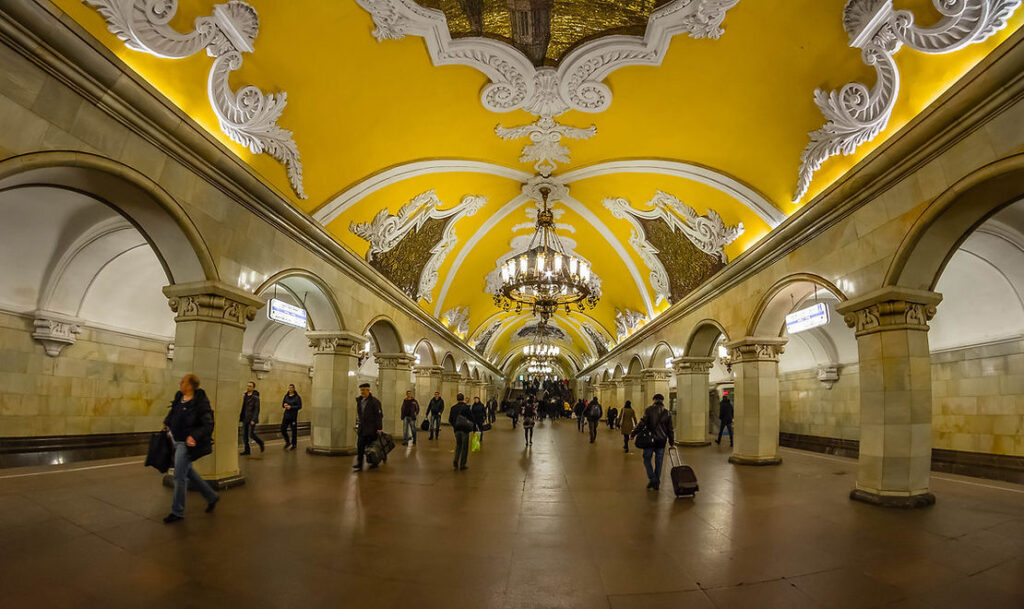
The metro is the backbone of the city and the first thing you should get comfortable with. It has over 260 stations across 15 lines, covers virtually every corner of Moscow, and runs with a frequency that takes most newcomers completely by surprise. During rush hour, trains arrive every 90 seconds to 2 minutes. During quieter periods, the wait is never more than 5 minutes. There is no timetable to memorize — you simply go down and a train is either already there or seconds away.
The newer trains — the Moskva-2020 series now running on most lines — are spacious, air-conditioned, and quiet. Free Wi-Fi is available throughout the network, and USB charging points are built into the newer carriages. This is not the crumbling Soviet-era infrastructure some people imagine. It is genuinely world-class urban rail.
A single metro journey costs 80 RUB. A monthly unlimited travel card (the best option for anyone living here) costs 3,600 RUB and covers the metro, buses, trams, electric buses, and suburban rail within the city. For context, that is less than the cost of two or three single journeys on the London Underground.
The MCC and MCD: Beyond the Underground
Most guides stop at the metro. Moscow’s transport story goes considerably further.
The MCC (Moscow Central Circle) is an overground circular railway running through the city, stopping at 31 stations and connecting to multiple metro lines. Modern Lastochka trains run the loop continuously, and transfers between the MCC and metro are free within a 90-minute window. Riding it offers something the underground cannot — open sky, panoramic views across the city, and a completely different perspective on Moscow’s geography.
The MCD (Moscow Central Diameters) are five urban rail lines that cut straight through the entire city from one side to the other, connecting the outer suburbs to the centre without a single transfer. Trains run every 5 to 6 minutes during peak hours, carriages are air-conditioned with free Wi-Fi and USB charging, and the fare structure is fully integrated with the rest of the network. For teachers living in residential districts further from the centre, the MCD can be a game-changer — a direct, fast, comfortable commute without going near the underground at all.
All three systems — metro, MCC, MCD — operate under one unified fare structure. One card, one tap, one city.
Buses, Electric Buses and Trams
For journeys that the underground does not quite reach, Moscow’s surface transport fills the gaps seamlessly.
City buses are modern, air-conditioned vehicles with contactless payment at every door. The route network is vast, covering every neighbourhood including those not served by metro lines. Real-time arrival information is available at stops and through Yandex Maps, so there is no standing around guessing when the next one will come.
Moscow has invested heavily in electric buses and now operates one of the largest electric bus fleets of any city in the world. They are quiet, smooth, and entirely free of exhaust fumes — a noticeably better experience than a conventional diesel bus, particularly in summer.
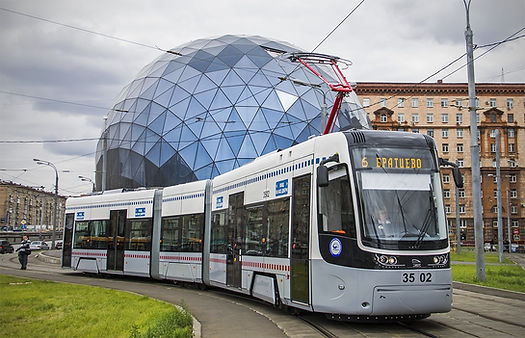
Trams have undergone a quiet revolution. The new low-floor Vityaz-Moskva trams are spacious and bright, with large panoramic windows and dedicated lanes that keep them flowing smoothly even when the rest of the city is gridlocked. On a sunny afternoon, taking a tram through one of Moscow’s older neighborhoods is one of the more pleasant ways to see the city.
Taxis and Ride-Sharing
For late nights, heavy shopping, or journeys to destinations not easily reached by public transport, Yandex Go is the go-to platform — the dominant ride-sharing app in Russia, equivalent to Uber in most other markets. It is reliable, widely used, and considerably cheaper than taxis in Western capitals.
A typical cross-city journey costs 700–1,500 RUB depending on distance, time of day, and demand. Short hops across a neighbourhood run 300–500 RUB. Surge pricing applies during peak hours and bad weather, so if you are not in a rush, waiting 10 minutes can make a meaningful difference to the price.
For new arrivals: Yandex Go is also the safest and most straightforward way to get from the airport into the city on your first day. Agree on the fare in the app before you get in and you will never have an issue.
Payment
Moscow gives you more ways to pay for transport than almost any other city.
The Troika card is the standard option — a reusable travel card accepted on every form of public transport. Top it up at any metro station or via app, tap on the validator, and you are through. Most regular commuters in Moscow use Troika.
A standard bank card works just as well — tap it directly at the turnstile, no registration required.
A smartphone via Apple Pay, Google Pay, or Samsung Pay is equally accepted everywhere. Many Muscovites use nothing else.
QR codes via the city transport app are available for those who prefer it, and cash remains an option at ticket windows throughout the network.
Navigating the City: Yandex Maps
Download Yandex Maps before you arrive — it is indispensable. Enter any starting point and destination and the app shows every possible route across all transport modes, with precise journey times and step-by-step instructions. The standout feature is real-time vehicle tracking: every bus, tram, and electric bus in the city is GPS-tracked, and the app shows you exactly where each one is and how many minutes until it reaches your stop.
In practice this means you never have to wait blindly at a stop. Check the app, see the bus is four minutes away, leave the house, arrive just as it pulls in. It sounds like a small thing but it transforms the daily experience of getting around a city of 12 million people into something genuinely stress-free.
Google Maps works in Moscow too, but Yandex Maps has significantly better real-time data for Russian public transport and is the one locals actually use.
River Trams
One final feature of Moscow’s transport system that surprises almost everyone: electric river trams now sail along the Moskva River as a formally integrated part of the public transport network, accepted on the same Troika card as everything else. These are not tourist boats — they run on regular schedules between fixed stops along the waterfront.
They are not the fastest way across the city, but as a way to experience Moscow from the water — embankments drifting past, bridges overhead, the skyline reflected below — they are unmatched. Worth doing at least once, and for those who live and work near the river, a genuinely viable commute option in the warmer months.
Practical Tips for New Arrivals
- Get a Troika card on your first day — available at any metro station, costs 50 RUB for the card itself.
- Download Yandex Maps and Yandex Go before you land.
- Your monthly travel card at 3,600 RUB covers unlimited journeys on all public transport — buy it as soon as you know you are staying.
- Airport transfers: Yandex Go from Sheremetyevo or Domodedovo into the city costs roughly 1,500–2,500 RUB and is far less stressful than negotiating with unofficial taxi drivers.
- Rush hour on the metro (8:00–9:30am and 5:30–7:30pm) is genuinely busy — if you can shift your commute by 30 minutes either way, it is worth doing.
- The metro runs until approximately 1:00am. After that, night buses cover the main routes, or Yandex Go is your option.
Moscow is a city that has thought carefully about how its residents move through it. The result is a transport network that is fast, affordable, modern, and — once you know how it works — remarkably easy to use. Most expat teachers find that a monthly travel card and Yandex Maps on their phone is genuinely all they need.